Can we create Arabic Calligraphy by using AI? – Modern Calligraphy Techniques
If you’ve typed an Arabic phrase into an image generator and received something that looks beautiful but reads as average, you’ve already run into the problem with Arabic calligraphy and AI. The answer to “can AI create it?” is a qualified yes. It depends on what you mean by “create,” and on which kind of AI tool you’re using.
This guide covers what different AI approaches can and can’t do, why Arabic script is harder for machines than most people expect, and how to produce clean, accurate digital calligraphy without needing years of training.
Can we really generate Arabic Calligraphy with AI?
AI can generate calligraphy-style artwork and help with design, but it can’t yet replace a trained calligrapher.
Image generators often produce letterforms that look convincing but are misspelled or malformed. Font-based and rule-based tools are more reliable for correct text. Handcrafted calligraphy by a master still sets the standard for proportion, rhythm, and meaning.
Why Arabic Calligraphy Is a Hard Problem for Machines
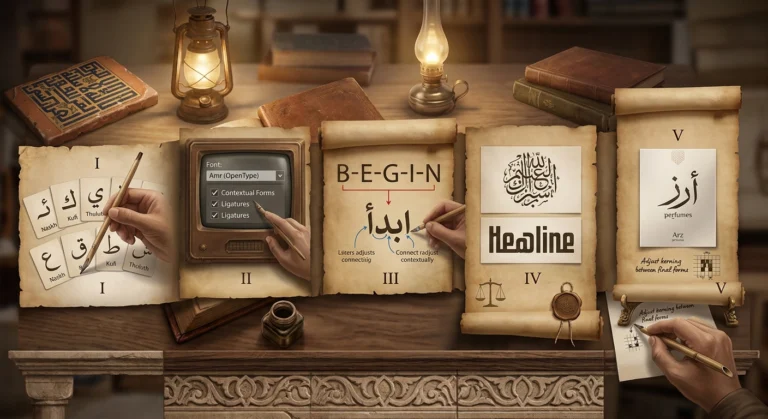
Arabic is written right to left in a cursive script where letters connect. Most letters change shape depending on position: isolated, initial, medial, or final. The letter ع (ʿayn), for example, looks noticeably different at the start, middle, and end of a word. Some letters never connect forward at all, which affects the spacing of the whole word.
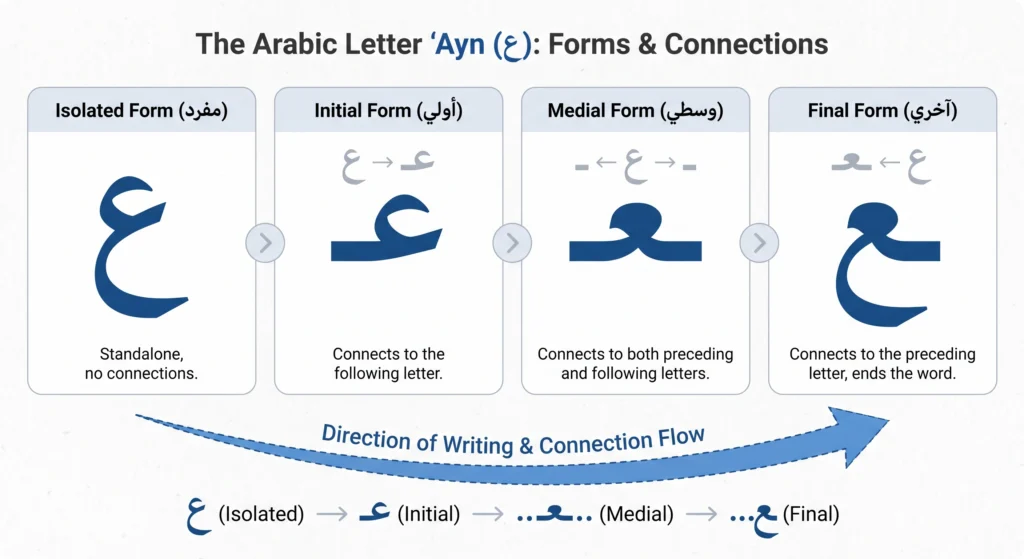
By adding dots and vowel marks (diacritics) above and below the letters, you will have a script where tiny errors change meaning. One misplaced dot can turn one word into another.
Classical Arabic calligraphy isn’t simply “fancy handwriting.” It follows proportional rules. The 10th-century scholar Ibn Muqla is traditionally credited with formalizing a system that measured letters against the rhombic dot made by a reed pen, and later masters such as Ibn al-Bawwab and Yaqut al-Musta’simi refined the classical scripts. Traditionally, calligraphers earned an ijazah, a certificate of mastery, after long apprenticeship. UNESCO added Arabic calligraphy to its Representative List of the Intangible Cultural Heritage of Humanity in 2021, recognizing it as a living tradition and not just a historical art form.
Three Things People Mean by “AI Calligraphy”
Text-to-image generators
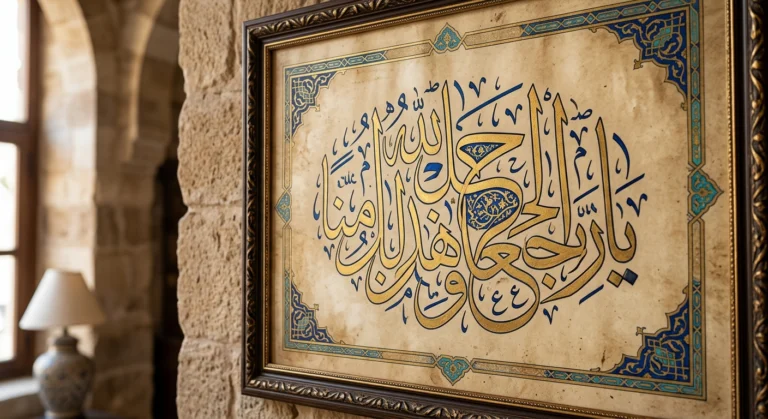
These are the tools most people try first: you describe an image, and the model generates it. They can produce striking compositions, such as gold lettering on dark blue, geometric backgrounds, and mosque inspired frames.
The weakness is text. Image models learn visual patterns rather than spelling rules, so Arabic output frequently contains letters that don’t connect properly, dots in the wrong places, or “pseudo-Arabic” that mimics the look of the script without saying anything. If you can’t read Arabic, you may not notice. If you can, it’s usually obvious. Results vary by tool and improve over time, but you should always verify the text.
Font based and rule based generators
These tools take your actual Arabic text and render it in a chosen style using fonts or layout rules. Because the text is typed in, the spelling and letter connections are correct. Modern fonts handle shaping through OpenType features that substitute the right letter forms automatically and apply ligatures.
This isn’t “AI” in the generative sense, but for most people who want a correct result, it’s the more dependable route. The exchange is that you’re choosing from styles that already exist and not inventing new compositions.
Machine learning behind the scenes
Some of the most useful applications are less flashy. Handwriting recognition for Arabic manuscripts, OCR that reads calligraphic and historical scripts, digitization of old documents, and research into style classification. These tools don’t make art, but they help scholars and archives work with calligraphy at scale. Real world accuracy still varies a lot between clean printed text and flamboyant manuscripts.
Where AI Still Falls Short
Script accuracy: As noted above, generated images can look right and read wrong. For anything you’ll print, publish, or hang on a wall, have a fluent reader check it.
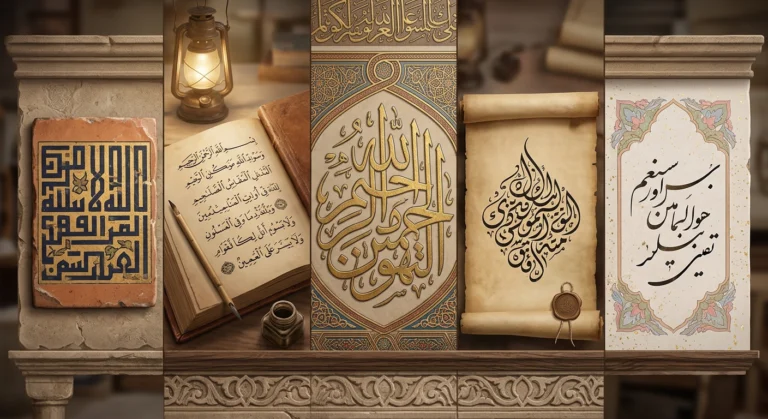
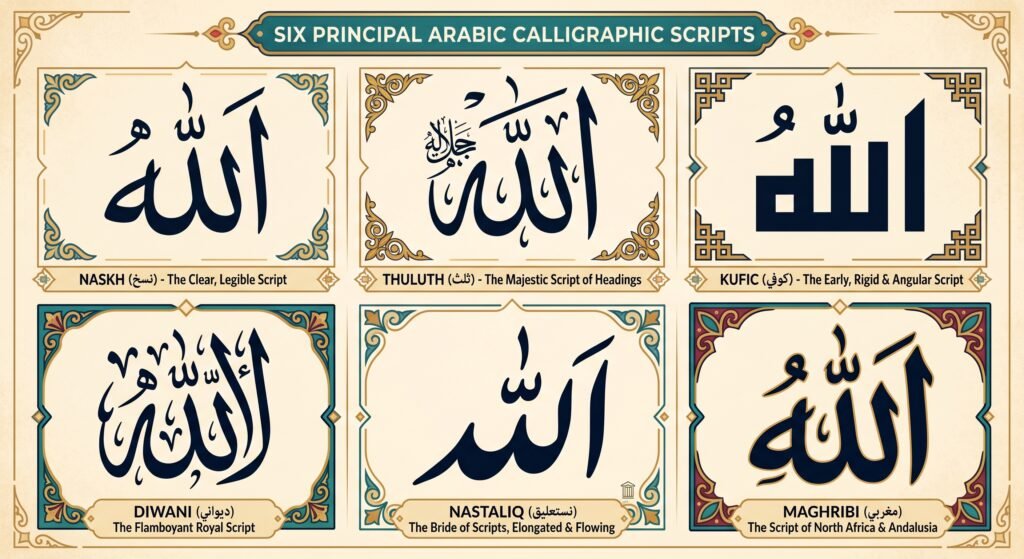
Style consistency: Each classical script has its own logic. Kufic is angular and geometric. Naskh is compact and highly legible, which is why it dominates printed Qur’ans and everyday text. Thuluth is flowing, with elegant curves and stacked compositions that suit mosque inscriptions. Diwani, developed in Ottoman times, is dense and rounded, with letters packed tightly. Nastaliq, associated with Persian and Urdu writing, has a sloping, hanging baseline. Maghribi has distinctive open, curved forms rooted in North Africa and al-Andalus. A generator may blend these without understanding where one ends and another begins.
Compositional judgment: Master calligraphers decide where a word breathes, where a stroke extends, and how a whole panel balances. That judgment comes from years of training and cultural knowledge, and current AI doesn’t reliably reproduce it.
Cultural and religious sensitivity: Many people want calligraphy for Qur’anic verses, names of God, or prayers. Here, mistakes here aren’t just aesthetic and they can be disrespectful Treat sacred text carefully, and don’t rely on unchecked generated output for it.
Where AI and Digital Tools Genuinely Help
Exploring ideas fast: If you’re designing a logo, poster, or social graphic, generative tools can help you explore colour palettes and layouts before you commit.
Learning the styles: Seeing the same word rendered in Naskh, Thuluth, and Kufic side by side is one of the quickest ways to understand how the styles differ. Beginners often learn more from comparison than from definitions.
Producing clean, correct text for design work :Designers, teachers, and small business owners often need accurate Arabic lettering and don’t have a calligrapher on call. A reliable text-rendering tool solves that.
Accessibility: Not everyone has access to reed pens, ink, and a teacher. Digital tools lower the barrier to experimenting with a deep tradition, as long as people understand they’re seeing an approximation and not the full craft.
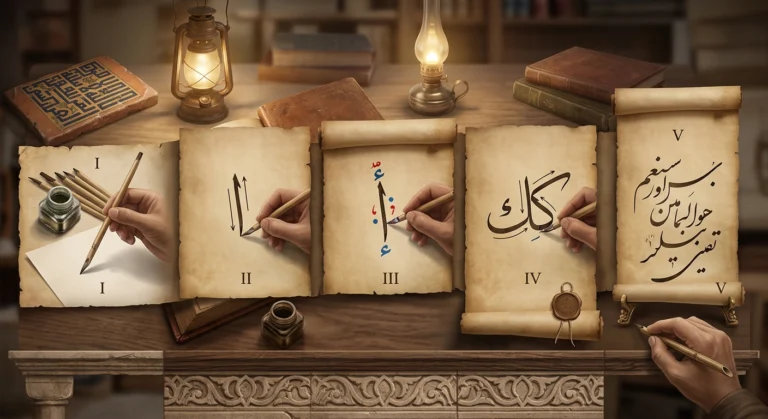
How to Create Digital Arabic Calligraphy Step by Step
Here’s a practical workflow that avoids the most common errors:
- Write your text in correct Arabic first. Use a reliable source, especially for names, phrases, or sacred text.
- Decide your purpose. A wedding invitation, a school project, and a tattoo reference all call for different levels of care.
- Pick a style that fits. Kufic suits bold, modern, geometric looks. Thuluth works for formal or architectural feel. Naskh is best when readability matters. Nastaliq is elegant for poetry.
- Render it with a tool that preserves your text. A free tool like Arabic Calligraphy Creator converts plain Arabic text into styled calligraphy in styles including Nastaliq, Naskh, Thuluth, Diwani, Kufic, Maghribi, and Kufi Modern, so the spelling stays exactly as you typed it.
- Compare styles. Try the same phrase in two or three scripts before choosing.
- Verify the result. Check letter connections, dots, and diacritics, ideally with a fluent reader.
- Refine in a design program if needed. Adjust color, size, and layout in your preferred graphic design software.
Is AI-Generated Calligraphy “Real” Calligraphy?
This is a fair question, and calligraphers themselves hold different views. In the traditional sense, calligraphy is a hand-trained discipline which includes the control of the qalam (reed pen), ink, paper, proportion, and years of practice. A generated image doesn’t come from that process.
At the same time, digital typography has been part of Arabic design for decades, and many contemporary artists use digital tools alongside traditional methods. It’s reasonable to think of AI and digital generators as tools for design and learning, while the craft of calligraphy remains a human art form. Being upfront about which one you’re presenting is the respectful approach.
Key Takeaways
AI can produce visuals inspired by calligraphy, but Arabic’s connected letterforms, dots, and proportional traditions make accuracy a real challenge for image generators. For correct text, a font based tool is more dependable. For artistry, mastery, and cultural depth, trained calligraphers remain unmatched. The best approach for most people is to combine reliable text rendering with your own design choices, and to double check anything meaningful.
If you’d like to see how a phrase looks across different scripts, try it in the Arabic Calligraphy Creator and compare the styles for yourself.